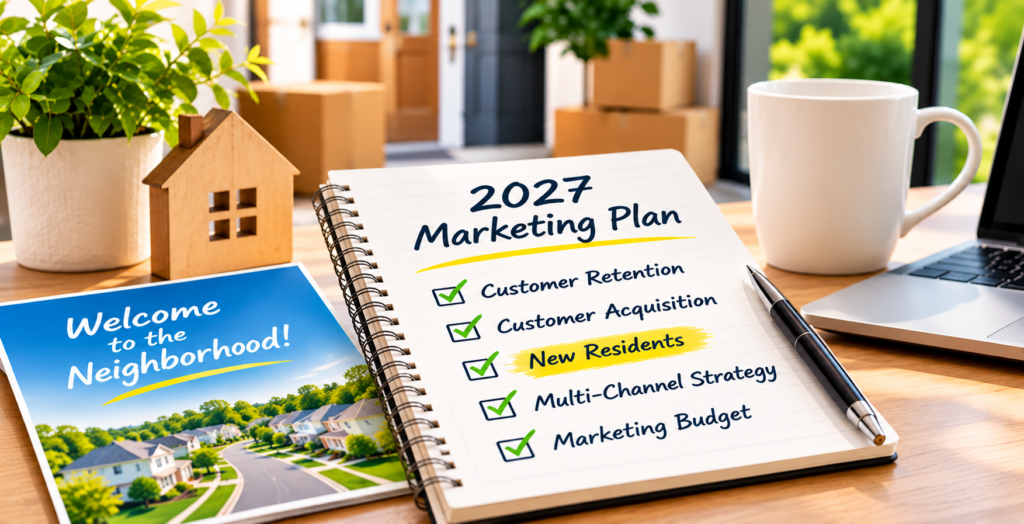
As business owners begin planning their marketing strategies for 2027, many are asking the same questions: Where should we invest our marketing budget? Which channels will generate the best results? And how can we continue attracting new customers while keeping existing ones engaged?
Your marketing plan probably includes familiar strategies like digital advertising, social media, email marketing, search engine optimization (SEO), and community outreach.
But there’s one audience that often gets overlooked.
What about the customers who don’t live in your market yet?
Every year, people move into new neighborhoods, bringing new opportunities for local businesses. They’re looking for restaurants, healthcare providers, home services, retailers, and other businesses to become part of their everyday routines.
And unlike established residents who may already have preferred businesses, new movers are often starting fresh.
A successful 2027 local marketing strategy should do more than reach the customers already in your community. Incorporating new mover marketing can help your business connect with people who are just beginning to discover local businesses.
Why Should New Residents Be Part of Your 2027 Marketing Plan?
Local markets are constantly changing.
Families relocate for new jobs, retirees settle into different communities, and homeowners and renters move into new neighborhoods throughout the year.
Each move creates an opportunity for businesses to introduce themselves to potential customers who may not yet have established relationships with local providers.
Think about everything that happens after someone moves.
They need to find a grocery store, choose a favorite restaurant, locate a dentist, identify a reliable auto repair shop, and discover businesses that can help them settle into their new community.
These decisions don’t always happen immediately, but many begin during the first few weeks and months after a move.
New mover marketing is a customer acquisition strategy that helps businesses reach recently relocated households while they’re discovering local businesses and establishing new purchasing habits.
By including this audience in your marketing plan, you create opportunities to connect with potential customers at a time when they’re actively exploring their options.
1. Start With Your Existing Customers, But Plan for New Ones
Customer retention should remain an important part of any local marketing strategy.
Email campaigns, loyalty programs, social media engagement, and personalized promotions can help keep your business top-of-mind with people who already know you.
But retention alone doesn’t guarantee growth.
Businesses also need a consistent way to introduce themselves to potential customers.
That’s where customer acquisition comes in.
A balanced marketing strategy should address two important goals:
- Customer retention: Encouraging existing customers to return, engage, and continue choosing your business.
- Customer acquisition: Introducing your business to new audiences and giving them a reason to become customers.
New residents represent a particularly relevant acquisition audience because they’re entering the community and may be evaluating local businesses for the first time.
Rather than relying exclusively on broad advertising to attract new customers, businesses can incorporate marketing that specifically reaches households experiencing a move.
2. Build a Marketing Strategy That Reaches Customers Across Multiple Channels
There’s no single marketing channel that works for every business.
A strong local marketing plan typically combines several approaches to reach customers at different stages of their decision-making process.
Search Engine Optimization (SEO)
Help potential customers discover your business when they search online for products and services in their area.
Digital Advertising
Use paid search, social media advertising, and other digital channels to reach relevant audiences and generate interest.
Email Marketing
Stay connected with existing customers, share promotions, and encourage repeat business.
Social Media
Build awareness, highlight your business, and strengthen connections within your community.
Direct Mail Marketing
Direct mail marketing helps businesses reach households with tangible, relevant messages and offers that encourage recipients to take action.
These channels don’t have to compete for your marketing budget. They can complement one another.
For example, a new resident might receive an introductory offer in the mail, search for the business online, read customer reviews, and visit its website before making a purchase.
The direct mail piece creates the introduction, while the business’s digital presence helps reinforce credibility and support the decision.
The goal isn’t to choose between traditional and digital marketing.
It’s to create a coordinated experience that makes your business easier to discover, recognize, and choose.
3. Make New Mover Marketing an Ongoing Strategy
Many businesses organize their marketing around seasonal promotions, holidays, and special events.
While these campaigns can be effective, customer acquisition shouldn’t depend entirely on the calendar.
People move throughout the year.
That means new potential customers are continuously entering your service area, regardless of whether you’re running a seasonal promotion.
Instead of treating new mover marketing as a one-time campaign, consider making it an ongoing part of your 2027 marketing strategy.
A consistent approach allows your business to introduce itself to new households as they arrive, rather than waiting until those residents have already established relationships with competitors.
For businesses with repeat-purchase potential, that early introduction can be particularly valuable.
A restaurant that becomes a family’s favorite takeout option, a dentist who welcomes a new patient, or an auto repair shop that earns a new resident’s trust may benefit from a customer relationship that extends well beyond the initial visit.
The opportunity isn’t just to generate one transaction. It’s to become part of a new resident’s routine.
4. Give New Residents a Reason to Choose Your Business
Reaching the right audience is important, but your message matters just as much.
When someone is new to an area, they may be unfamiliar with the businesses around them.
An effective introductory offer can help reduce the hesitation of trying somewhere new.
Depending on your industry, that might include a complimentary service, a discount on a first purchase, a welcome gift, or another incentive that encourages an initial visit.
Understanding what makes a great offer can help businesses create incentives that are easy to understand, relevant to their audience, and aligned with their marketing goals.
But remember, the offer is only the beginning.
The experience customers have after redeeming it plays an important role in whether they return.
A great first impression, quality service, and consistent follow-up can help turn a promotional response into a lasting customer relationship.
5. Allocate Your 2027 Marketing Budget With Customer Acquisition in Mind
As you evaluate your marketing budget for the coming year, consider how much you’re investing in reaching new customers versus engaging existing ones.
You don’t necessarily need to increase your overall marketing spending.
Instead, look at how your current budget is distributed and whether each channel supports a clear objective.
Ask yourself:
- Are we consistently reaching potential customers who are new to our community?
- Are we relying too heavily on the same audiences?
- Which marketing channels are generating new customers rather than only impressions or engagement?
- Are we measuring customer acquisition costs and repeat purchases?
- Does our marketing strategy account for households moving into our service area throughout the year?
These questions can help identify opportunities to make your marketing investment more intentional.
A successful plan should balance short-term promotional goals with long-term customer acquisition and retention.
6. Measure Results Beyond the First Response
As you build your 2027 marketing strategy, make sure you’re also planning how to measure success. Understanding how to measure direct mail ROI can help you evaluate campaign performance beyond the initial response.
Website visits, social media engagement, and campaign responses can provide useful insights, but they don’t always tell the full story.
For local businesses, important performance metrics may include:
- Response rate: How many people took action after receiving your marketing message?
- Customer acquisition cost: How much did you spend to acquire a new customer?
- Revenue generated: How much sales activity can be attributed to your campaigns?
- Average transaction value: How much did customers spend per purchase?
- Repeat visits: How many first-time customers returned?
- Customer lifetime value: What is the potential long-term value of the customers you acquire?
Understanding these metrics helps businesses evaluate performance, adjust their strategies, and make better marketing decisions throughout the year.
The true value of a customer acquisition campaign isn’t always captured by the first transaction.
7. How Can Our Town America Support Your 2027 Marketing Strategy?
For more than five decades, Our Town America has helped local businesses connect with new residents as they settle into their communities.
Our New Mover Program introduces participating businesses to recently relocated households through a welcome envelope featuring offers from local businesses.
By reaching households during this important transition, businesses have an opportunity to make an early introduction and encourage new residents to give them a try.
Our Town America also offers targeted postcard marketing and digital advertising options to help businesses complement their broader marketing strategies.
With tracking tools like TruTrak®, participating businesses can gain visibility into customer responses and better understand campaign engagement.
The goal is simple: help businesses build awareness, attract new customers, and establish relationships with people who are just beginning to explore their new communities.
Frequently Asked Questions About Local Marketing Planning
What should a local marketing strategy include in 2027?
A local marketing strategy should combine customer retention, new customer acquisition, online visibility, relevant advertising, community engagement, and performance measurement. Businesses should choose channels based on their audience, budget, and growth objectives.
Why is new mover marketing important for local businesses?
New mover marketing helps businesses reach people who have recently relocated and may be searching for new restaurants, stores, healthcare providers, and service businesses. It creates opportunities to introduce a brand before residents establish regular purchasing habits.
When is the best time to market to new residents?
Businesses should aim to reach new residents early in the moving process, when they’re exploring their community and making decisions about where to shop and which services to use. Since households move throughout the year, ongoing outreach can help maintain consistent visibility.
Can direct mail and digital marketing work together?
Yes. Direct mail can introduce a business through a physical offer, while digital marketing helps reinforce recognition through search results, websites, reviews, and online advertising. Using multiple channels can create a more connected customer experience.
How can businesses measure the success of new mover marketing?
Businesses can track offer redemptions, customer responses, revenue, acquisition costs, and repeat purchases. Combining campaign tracking with sales data provides a more complete understanding of marketing performance.
Plan for the Customers You Haven’t Met Yet
Your 2027 marketing strategy should reflect the customers you have today—and the ones who will arrive tomorrow.
While retaining existing customers remains essential, sustainable business growth also depends on consistently introducing your brand to new audiences.
Every new household entering your community represents an opportunity to build awareness, earn trust, and establish a new customer relationship.
By combining digital marketing, direct mail, customer engagement, and ongoing new mover outreach, local businesses can create a more complete marketing strategy for the year ahead.
Because your next loyal customer might not live in your neighborhood yet.
How Many New Movers Are Entering Your Market?
As you plan your 2027 marketing strategy, make sure you’re not overlooking the new households moving into your community.
Check ZIP Code availability with Our Town America to explore new mover marketing opportunities in your area and discover how your business can connect with new residents.



 Mike